
Best Crops for a Shady Allotment Plot
Every allotment site has one: the plot at the far end, backed by a hedge, with a shed on the north side and a line of trees that were old when the site was laid out. If that is the one you were given, you have not been handed a dud. A shady plot will never grow you a decent tomato, but it will grow the best salad leaves on the site, and it will do it in July when everyone else's lettuce has bolted and turned bitter.
The trick is to stop fighting the shade and start choosing crops that actually want what you have. That means growing for leaves, roots and stems, saving the sunniest strip for anything that has to set fruit, and being honest about what will never repay the space.
Start by Reading the Shade
Before you order a single seed packet, spend a day watching your plot. Shade is not one thing, and the difference between a light, moving shadow and permanent gloom is the difference between a productive bed and a path.
- Light shade — roughly three to five hours of direct sun, often early or late in the day. Most vegetables will manage here. Yields drop, but they do not disappear.
- Partial shade — two to three hours, or dappled light all day under a loose canopy. This is salad, herb, root and soft fruit territory.
- Deep shade — under two hours, or none at all. Realistically this is a path, a compost bay, a shed base, or a home for mint and wild garlic.
Light also shifts through the seasons. In late June the sun sits high and a bed may be in gloom all day; by October the same spot can be catching three or four hours, because the sun is lower and coming in under the branches. That is why overwintering crops — garlic, broad beans, winter salads — often do surprisingly well in the worst-looking corner of a plot.
Then look at what is casting the shade. A neighbour's hedge gives a soft shadow that moves. A mature sycamore or willow does something harder to live with: it sends roots under your beds and drinks the soil dry, so plants there are competing for water as well as light. Both problems have the same partial answer, which is a raised bed with a decent depth of fresh soil and a mulch on top.
Leafy Crops: The Backbone of a Shady Plot
Leaves are the cheapest thing a plant can build, which is why leafy crops cope with low light far better than anything that has to flower, fruit and ripen seed. A shaded lettuce may take two weeks longer to heart up, but it will be tender and slow to bolt. Shade genuinely improves some of them.
- Loose-leaf lettuce — the single best crop for a shady plot. Sow little and often and you will cut salad from spring to autumn.
- Rocket, mustard greens and mizuna — fast, punchy, and far less likely to run to flower in shade.
- Spinach and chard — both crop steadily. Chard is the tougher of the two and will keep going through winter.
- Kale and purple sprouting broccoli — slow but worthwhile. Kale in particular shrugs off a few hours less sun.
- Corn salad (lamb's lettuce) and land cress — the classic winter salad pair, and happy in serious shade.
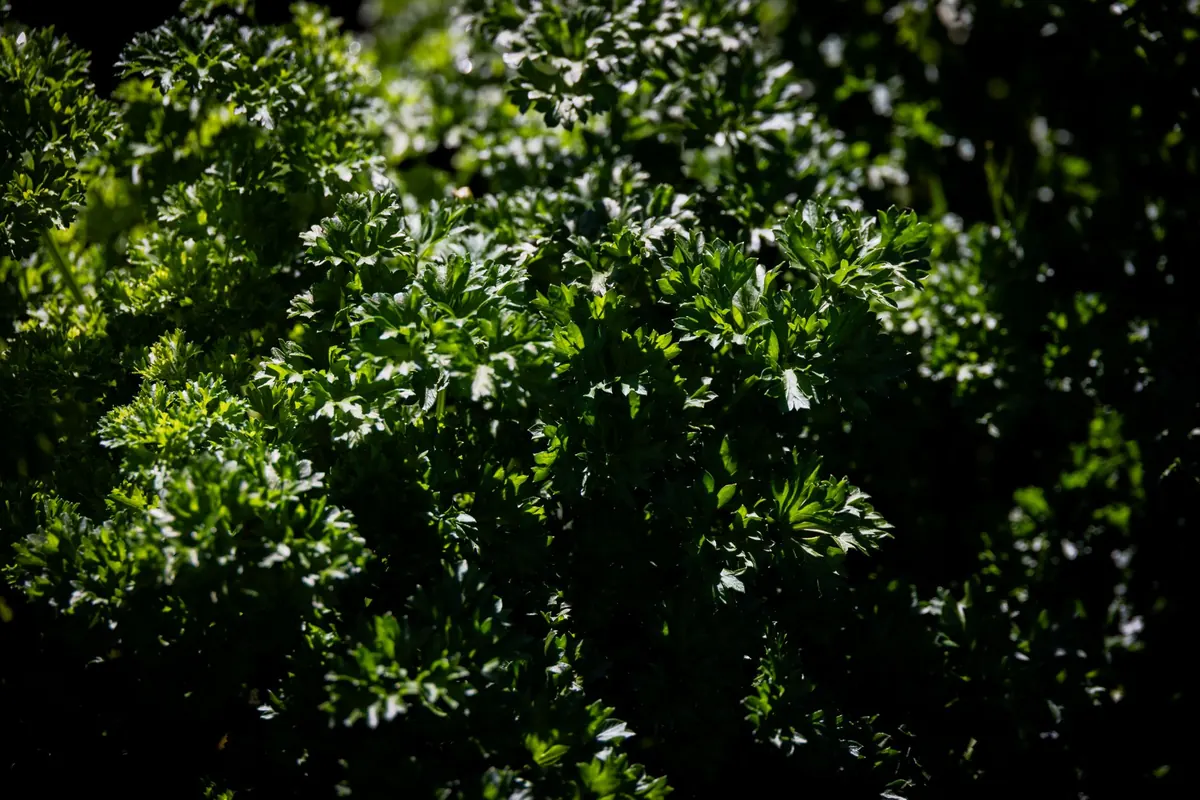
- Sorrel and parsley — cut-and-come-again perennials that will sit in the same spot for years.
The trade-off is speed and slugs. Shaded ground stays damper and cooler, which suits lettuce and suits molluscs equally well. Water in the morning rather than the evening where you can, keep the bed free of damp hiding places, and patrol after rain.
Roots, Alliums and Pods That Cope
Root crops will not size up as quickly in shade, but the ones below are worth the space. Alliums are the quiet winners here: they are not trying to produce fruit, so light is less critical.
- Beetroot, radish and turnips — quick, forgiving, and fine for lifting young.
- Carrots — slower to fill out, but usable. Thin them properly or you will get a bed of forked, spindly roots.
- Leeks, garlic, onions from sets and spring onions — steady performers in partial shade.
- Potatoes — they will crop, just smaller. Good for a first season while you work out where the light actually falls.
- Broad beans and early peas — sow them in autumn or late winter. They flower and pod before the canopy closes over, so they dodge the worst of the shade entirely.
Herbs for the Shadiest Corners
Ignore the Mediterranean herbs here. Rosemary, thyme, oregano and lavender all want baking sun and sharp drainage, and in shade they go leggy, dull and prone to rot. The soft, leafy herbs are a different story: mint, parsley, chives, chervil, coriander, lovage, lemon balm, sweet cicely and wild garlic all prefer the cooler, damper conditions a shady plot provides. Coriander in particular is far more useful grown in shade, because it stays leafy for weeks instead of bolting the moment the weather warms up. Keep mint in a pot sunk into the ground unless you want it everywhere.
Soft Fruit That Still Crops
Fruiting plants need sun to sweeten a crop, so treat this section as a list of what will give you something rather than what will give you a glut.
- Rhubarb — the most reliable fruiting plant for a shaded plot. It will crop in partial shade for years with nothing more than a mulch and a bit of patience.
- Blackcurrants and gooseberries — they will fruit in light shade, just later and less sweet.
- Autumn-fruiting raspberries — more tolerant of shade than summer varieties, and they crop on this year's canes, so a late frost will not wipe you out.
- Alpine and wild strawberries — small, intensely flavoured and much happier in shade than ordinary strawberries, which really do want the sun.
What Not to Bother With
Tomatoes, peppers, chillies, aubergines, sweetcorn, courgettes, squash, pumpkins, runner beans, French beans and melons all need direct sun to fruit well. Planted in shade they will usually grow — and that is the problem. You get tall, soft, mildewed plants that take up the best part of a bed and give you almost nothing. Save them for the brightest strip you have, or grow a couple in pots on a sunny path where they can be moved around. Blueberries are another one to leave alone unless you have sun and genuinely acidic soil.
Getting More Light Out of a Shady Plot
You cannot move the sun, but you can stop wasting the light you get.
- Deal with overhanging branches. If a hedge or tree on your boundary is casting the worst of the shadow, ask the site secretary or council what you are allowed to cut. Never take a saw to a tree without checking first — some are protected, and boundary hedges usually belong to someone else.
- Bounce light back. A pale-painted wall, a sheet of white board behind a bed, or light-coloured gravel on a path all reflect useful light onto nearby plants. It sounds fussy; you can see the difference in a lettuce bed within a fortnight.
- Build up. Raised beds lift your soil above tree roots and let you control drainage and fertility. Ten to twelve inches of good soil is plenty for salads, roots and herbs.
- Run your rows north to south. Rows running north–south let light down both sides of the row as the sun moves, rather than one row shading the next.
- Match crops to the season, not just the spot. Put summer salad and herbs where the June shade is heaviest, and overwintering garlic, broad beans and winter greens where it is lightest in autumn and spring.
- Do not overcrowd. Plants in shade grow softer and slower. Space them slightly wider than the packet suggests so air moves through, which cuts down on mildew and damping off.
- Keep the boundary tidy. A hedge that has crept a metre onto your side is costing you light all season. Cut back what is yours to cut.
A Realistic Plan for a Shady Plot
Give the sunniest quarter of the plot to the fussy crops — tomatoes, beans, courgettes — and accept that it will be a small patch. The next brightest band is for roots, alliums, peas and broad beans. The middle ground becomes your salad and herb beds, sown in short rows every three or four weeks so you always have something to cut. The gloomiest corner gets rhubarb, mint, wild garlic and a raised bed of winter greens.
Work with that layout for a full year before you change it. Shade moves with the seasons, and a plot that looks hopeless in June can be the most productive part of the site by October. Keep notes on where the sun lands and when, and you will end up with a plot that feeds you properly rather than one you spend every summer apologising for.
Photo: Magda Ehlers / Pexels