
Foraging Blackberries: When, Where and How to Pick Safely
Somewhere in late summer, the hedge along the lane stops being scenery and starts being a larder. Blackberry canes that looked like nothing but a thorny mess in June suddenly hang heavy with fruit, and half the neighbourhood seems to be out with a tub. It is one of the easiest ways to eat for free, and one of the easiest to get wrong — picking sour berries, filling a bag with fruit from a sprayed verge, or shredding your hands on thorns. Get a few basics right and a blackberry walk becomes a genuinely good afternoon.
Start by getting the plant right
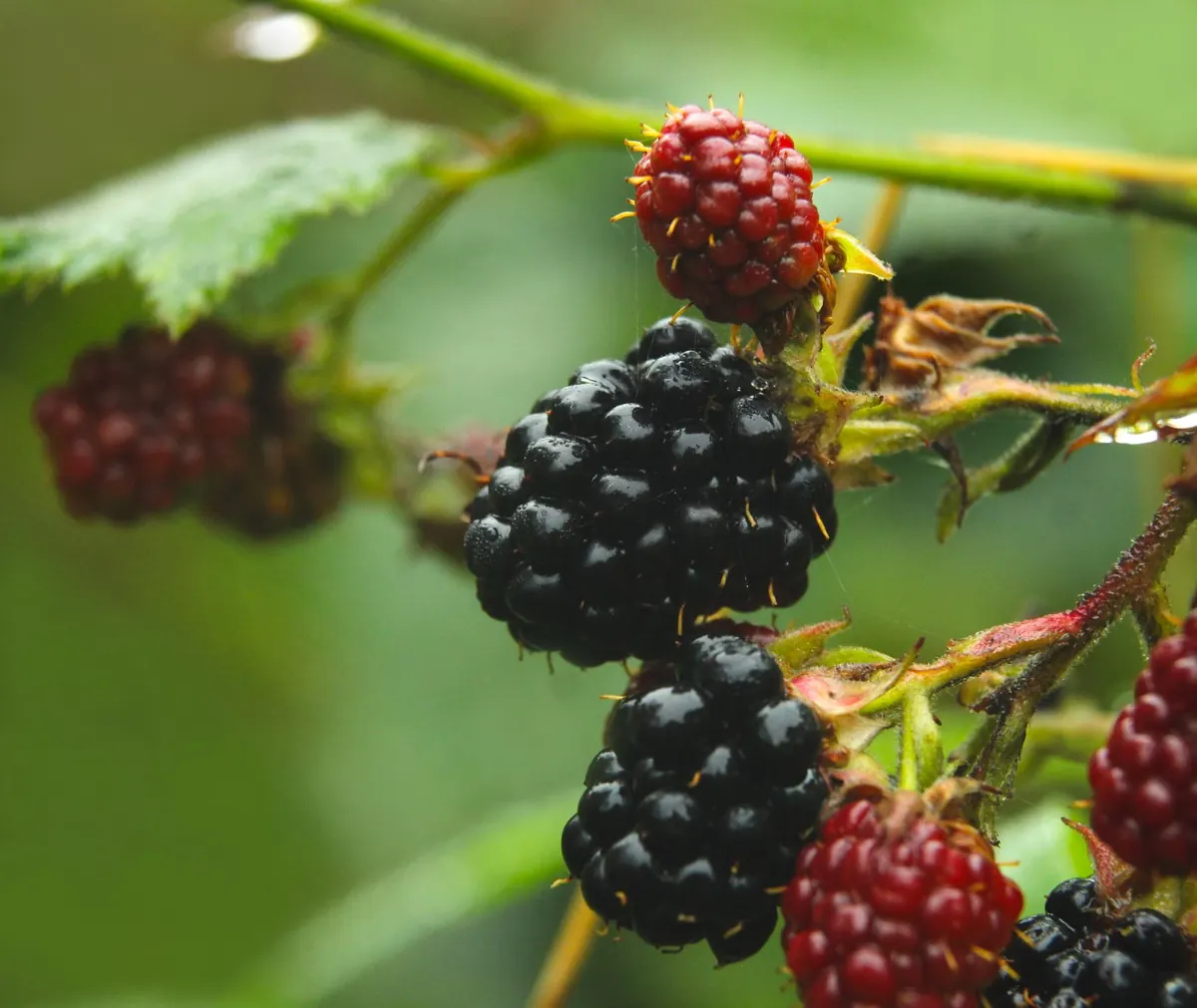
A blackberry grows on a bramble: arching, woody, thorny canes that root where they touch the ground. The leaves are usually made up of three to five toothed leaflets, and the flowers, if you catch them earlier in the year, are white or pale pink. The fruit forms in clusters, turning from green to hard red to deep black as it ripens.
Ripe blackberries are not just dark. They should be almost dull black, slightly soft when you squeeze them gently, and they come away with the lightest tug — a berry that resists is not ready. Look for the ones on the sunny outer edge of the bush first; fruit ripens there a week or two before the shaded clumps inside. Taste as you go rather than trusting colour alone, because a berry can be black and still sour after a wet spell.
One useful test when you pick: a blackberry comes away with the pale core still inside it, so the picked fruit looks solid. A raspberry, growing on the same kind of plant, slips off leaving a hollow, thimble-shaped shell. Both are edible, so this is more about knowing what you have than staying safe.
Berries that are not blackberries
The rule that keeps most people out of trouble is simple: no thorns, no bramble fruit. Blackberries always grow on a prickly, scrambling shrub in tight clusters with a powdery bloom on the skin. Single shiny black berries on a soft, leafy, thorn-free plant are something else entirely — deadly nightshade and common nightshade both produce small black berries and both are toxic, and buckthorn, a shrub or small tree with black berries along the twigs, is a violent laxative rather than a snack. If it does not look and feel like a bramble, leave it alone.
When to go
The main season runs from late summer into early autumn, though the exact weeks shift with your region, the weather and how high up the ground is. Sheltered, south-facing hedges start first; cooler, wind-scoured sites lag behind. Rather than waiting for a single perfect day, plan on several visits. A single bush ripens gradually, so the berries you leave behind on a Tuesday can be worth returning for on Saturday.
Pick on a dry day, ideally after two or three dry days in a row. Wet berries are watery, bruise faster and go mouldy within a day. Rain also leaves the canes slick, and a slippery bank of brambles is not somewhere to test your balance.
Where it is safe to pick
Where you pick matters as much as what you pick. Blackberries soak up whatever is around them, and a busy roadside verge is not a clean larder. As a general guide:
- Avoid hedges along fast or busy roads, where fruit carries dust and exhaust.
- Skip verges and field margins that may have been sprayed with pesticide or herbicide, and never pick where you can see spraying has just happened.
- Stay off railway embankments, motorway banks and similar ground — it is dangerous and often not open to the public.
- On popular dog-walking paths, pick above knee height, and rinse everything when you get home.
- Favour old hedgerows, woodland edges, public footpaths, quiet lanes and the tangle at the back of your own garden, where you know what has been done to the ground.
- Check the local position before you fill a tub. Rules on picking from public land differ from country to country and even between councils, and on private land you need the landowner's permission. If you are unsure, ask — it usually takes one conversation.
Kit and technique
Brambles fight back, so dress for it. Long sleeves, long trousers, sturdy boots and a pair of thick gloves make the difference between a pleasant hour and a scratched, itchy evening. A hooked stick or a walking pole is handy for pulling a high cane down within reach instead of leaning into the bush. For containers, shallow tubs or a wide basket beat a deep bag, which crushes the fruit at the bottom, and a lid keeps berries in when you stumble.
Then it is mostly patience:
- Work from the outside of the bush inwards, so you never have to push through thorns.
- Cup your hand under a berry, roll it gently with your thumb and let it drop into your palm.
- Put it straight into the tub — a layer two or three berries deep at most.
- Move on rather than picking a bush bare, and check the underside of the fruit for grubs and beetles as you go.
- Watch your footing. Nettles, hidden holes, loose earth and ticks in long grass are the usual hazards, so check yourself over afterwards.
A short soak in salted water when you get home floats out debris and any small inhabitants; drain, rinse and use the berries soon after.
Pick so there is a crop next year
Brambles fruit on canes that are a year or two old, so a broken stem is next summer's berries gone. Never rip canes out of the way, never cut them back to get at a clump, and do not stamp down the ground beneath the hedge to reach the middle. Take a share and leave a share — the blackbird, the dormouse and the late-season picker all depend on the same crop. Keep your group small, keep dogs out of the bramble, and carry your litter home with you.
From hedge to kitchen
Blackberries do not keep long. Leave them in a single layer, keep them out of the sun on the way home, and refrigerate them for two or three days at most. Wash them only when you are ready to use them, since damp fruit spoils faster. Anything you cannot eat fresh freezes well: spread the berries on a tray, freeze them, then tip them into a bag so they stay loose. The rest becomes crumble, jam, cordial or a sauce for game.
As with any wild food, only eat what you have identified with certainty, and rinse it well. If you have allergies, a health condition or you are pregnant, check with a health professional before making foraged fruit a regular part of your diet.
The first tub is the best one
Go on a dry morning, take a friend, wear the gloves you keep meaning to throw out, and expect a few scratches. Taste as you pick, work slowly along the sunny side of the hedge, and stop while it is still fun. A tub of blackberries costs nothing but an hour, and the crumble you make from them will taste better than anything you could have bought that afternoon.
Photo: Gosia K / Pexels